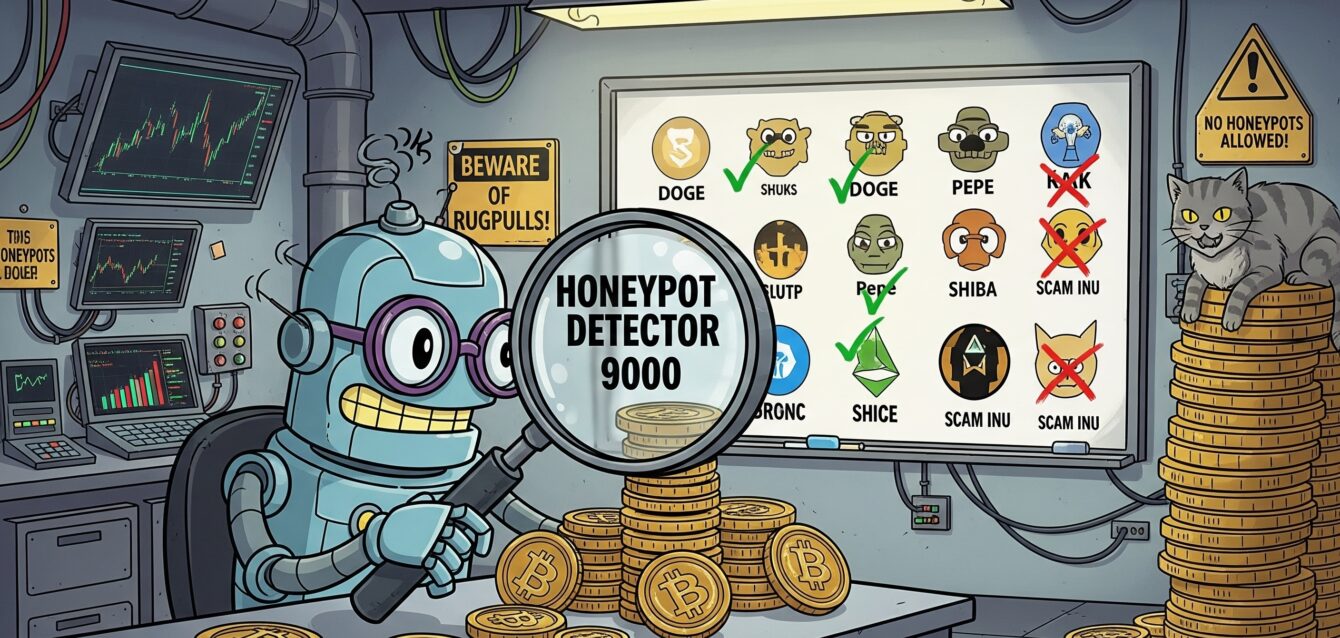
In the wild west of Solana meme coins, speed is power—but caution is survival. Every second, a new token launches. Some moon. Some rug. Others? They’re honeypots—traps designed to lure buyers in but block them from ever selling.
Here’s the reality: without protection, your wallet is just bait for malicious smart contracts.
That’s where our bot comes in.
This blog takes you deep inside our meme coin auto-trading algorithm—specifically, how it identifies and avoids honeypot traps before a single SOL is spent.
🐻 What Exactly Is a Honeypot in Crypto?
A honeypot token is a malicious contract that allows buying but blocks selling. Once you’re in, your funds are stuck. The dev pulls liquidity—or worse, siphons value through hidden logic.
Common honeypot tricks:
- Blocking all sells unless from the dev wallet
- 99% tax on sales
- Transfer limits that freeze tokens
- Fake liquidity pools with trap logic
New meme coins = prime ground for this kind of scam.
⚠️ Why Solana Honeypots Are Especially Dangerous
- Transactions settle in milliseconds
- Contracts are cheap to deploy
- Little to no verification is required
- Devs rotate wallets constantly
By the time a human realizes it’s a trap, it’s too late.
🧠 Our Algorithm’s 3-Layer Honeypot Detection
Before our bot makes a trade, it performs three lightning-fast honeypot checks:
1. Static Contract Screening
We disassemble the token’s smart contract and run it against a list of known honeypot patterns:
- Blocked
transferFromfunctions - Disguised
_beforeTokenTransferlogic - Hardcoded wallet allowlists
If there’s a match → Auto-skip
2. Simulated Sell Test
We simulate a sell transaction from a random new wallet, using MEV-style bundling techniques.
- If the simulation fails or returns a huge tax, → Bot skips
- If the transaction is stuck in a loop or requires a whitelist,t → Bot skips
This happens before any real funds are used.
3. Behavioral Honeypot Indicators
Even if the code is obfuscated, the behavior tells all:
- All buys = unique wallets, no sells = 🚩
- Dev wallet buys, sells, and exits = 🚩
- 3+ failed sells from other wallets = 🚩
Our model combines these red flags to calculate a honeypot risk score. If it exceeds the threshold? Token blacklisted.
🛡️ Real-Time Defense: What Happens Before Entry
- 🧪 Contract is decompiled and matched
- 🧠 Wallets are analyzed for past honeypot interactions
- ⚙️ Token is simulated in a dummy sell sandbox
- ⏱ All this in <300ms using Solana RPC WebSocket
Only if the token passes all 3 layers does the bot consider moving to the next phase: rug scoring.
🧬 Other Layers of Safety in Our Auto-Trade Stack
- Rug-pull scoring system
- Liquidity lock analysis
- Wallet distribution analysis
- Blacklist/allowlist integration
- Auto-sell fallback trigger if price crashes too fast
Our algorithm isn’t just about entry—it’s about surviving long enough to exit.
📄 Author’s Thoughts
“Honeypots used to fool even the smartest devs. Now they just fail our simulation test.” — @CryptoVenom, Smart Contract Security Auditor
In 2025, meme coin trading isn’t just about speed—it’s about trusting your tools.
Bots are evolving. Ours is already there.
✅ Avoid honeypots with pre-trade simulation
✅ Score every token with multi-layer logic
✅ Stay early—and stay safe
Explore Ailtra.ai to get started or join our Telegram to see the bot in action.